Norweco Singulair Green Benefits for Environmentally Responsible Homeowners
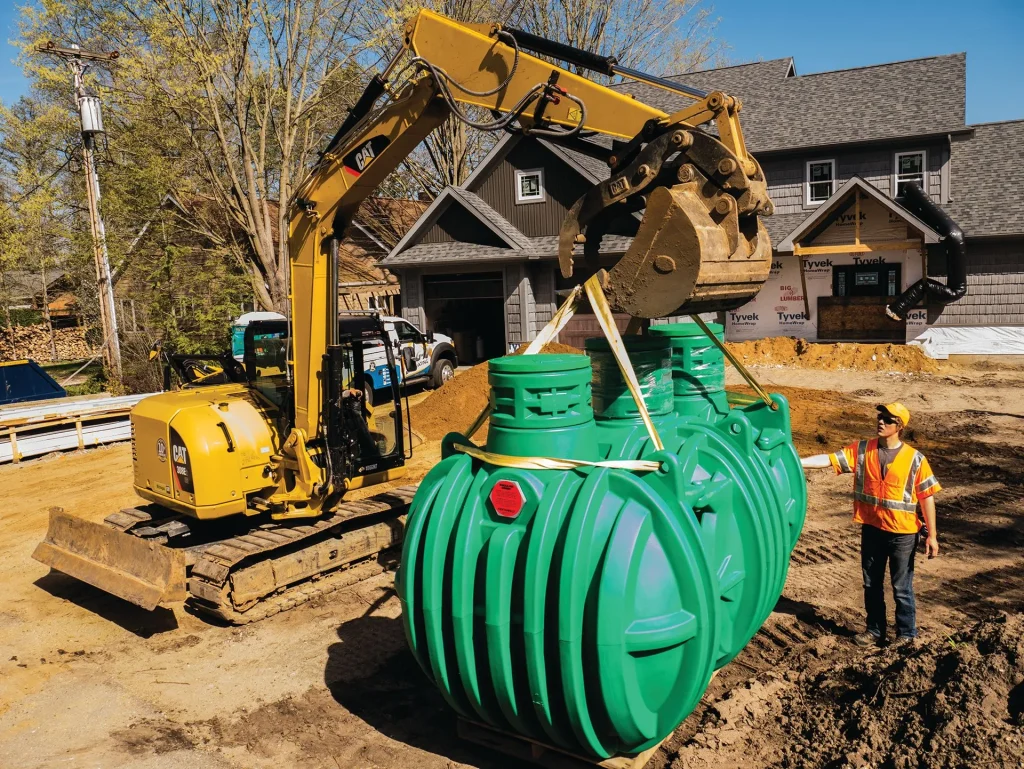
For homeowners who care about their environmental footprint, wastewater is one of the least visible and most important parts of the property. Solar panels are easy to point to. Native landscaping gets compliments. Septic treatment, by contrast, sits underground and quietly determines whether a home is protecting groundwater, overloading soil, or sending poorly treated effluent into the local environment.
That is why systems like the norweco singulair green draw so much interest from people trying to align home infrastructure with environmental values. The appeal is straightforward. A well-designed onsite treatment system can reduce pollutant loads, support responsible water management, and work on lots where a conventional septic setup may struggle. The reality, though, is more nuanced than the sales language homeowners often hear.
I have found that the smartest buyers ask a different set of questions than the average shopper. They do not just ask, “Will it pass inspection?” They ask whether the system will actually perform under seasonal use, whether maintenance expectations are realistic, whether energy consumption offsets some of the environmental gain, and whether the treated effluent is genuinely better for the site. Those are the right questions.
Why advanced onsite treatment matters
A conventional septic system does one job reasonably well when conditions are favorable. Wastewater flows into a septic tank, solids settle, scum rises, and partially clarified effluent moves into a drainfield, where the soil finishes the treatment norweco singulair green process. On an appropriate site with suitable soils, proper setbacks, and consistent maintenance, that setup can serve a home for many years.
The trouble starts when any part of that chain is less than ideal. Tight clay soils, shallow seasonal water tables, small lots, waterfront properties, steep slopes, or homes with irregular occupancy patterns can all complicate performance. In those cases, untreated or partially treated wastewater does not just disappear. It can contribute nutrients, pathogens, and oxygen-demanding waste to soils and water bodies that are already under pressure.
Advanced treatment systems exist because many homes need more treatment before effluent reaches the soil. An aerobic treatment unit, which is the general category associated with the Singulair line, introduces oxygen into the treatment process so aerobic bacteria can break down waste more efficiently than in a strictly septic environment. Better treatment in the tank often translates into cleaner effluent leaving the unit, which can reduce stress on the downstream dispersal area.
That is the environmental case in plain language. The soil still matters. Installation still matters. Maintenance matters a great deal. But starting with better-treated wastewater can be a meaningful step for a homeowner trying to reduce impact.
What homeowners are usually looking at with a norweco singulair green system
Product names can create confusion, especially in wastewater treatment, where regional regulations, dealer terminology, and configuration options vary. In practice, when people discuss a norweco singulair green system, they are usually talking about an advanced residential wastewater treatment approach built around aerobic treatment principles, often marketed as a more environmentally responsible alternative to a basic septic setup.
The core appeal is not that it makes wastewater harmless. No residential system should be described that way. The appeal is that it can improve treatment quality before effluent moves to the next stage, which may include soil dispersal, drip distribution, or other approved discharge methods depending on local code. For environmentally responsible homeowners, that improvement matters because the cleaner the effluent, the lower the burden on soil and surrounding ecosystems.
I have seen this make a particular difference in areas where the margin for error is small. Lake communities, coastal parcels, and lots with constrained drainfield space tend to put wastewater front and center. In those places, choosing an advanced treatment system is often not only a practical decision but a values-driven one.
The environmental benefits that are worth taking seriously
It is easy to overstate green benefits in home infrastructure. A more useful approach is to identify the environmental advantages that stand up to scrutiny.
- Improved treatment before soil dispersal, which can reduce the amount of organic matter and suspended solids reaching the drainfield.
- Lower stress on the soil absorption area, often helping preserve performance over time when the system is properly maintained.
- Better suitability for environmentally sensitive lots, where conventional systems may be a poor fit.
- Potential support for nutrient management goals in regulated areas, depending on the approved design and local requirements.
- A smaller risk of some common failure patterns associated with overloaded or poorly matched conventional systems.
Each of those benefits comes with a qualifier. “Improved treatment” does not mean “maintenance-free.” “Better suitability” does not mean “works anywhere.” “Potential support” does not mean every configuration removes nutrients to the same level. Still, these are meaningful advantages, especially compared with an undersized or poorly located conventional septic system.
One of the clearest environmental gains is indirect. Cleaner effluent can help a drainfield do its job longer and more effectively. When a conventional system sends effluent with high solids into the field, biomat buildup can accelerate and infiltration can suffer. Once a field starts to fail, the environmental consequences move fast. Surfacing effluent, sewage odors, and groundwater concerns are no longer abstract possibilities. They become a property problem and a neighborhood problem. A better-treated discharge can reduce that stress, which is a real green benefit even if it is not the most glamorous one.
Cleaner effluent is not a marketing phrase, it changes what happens underground
Homeowners often imagine wastewater treatment as a yes-or-no process. Either the system works or it does not. In reality, performance exists on a spectrum. The difference between mediocre effluent and well-treated effluent can shape what happens in the soil for years.
When wastewater leaves a tank with fewer suspended solids and lower organic loading, the receiving soil has less work to do. That matters because soil treatment is not infinite. It depends on pore spaces, oxygen movement, microbial activity, moisture balance, and time. If effluent arrives overloaded, those conditions deteriorate. If it arrives in better condition, the soil can function more like a polishing stage and less like an emergency filter.
For environmentally responsible homeowners, that distinction is worth understanding. Your impact is not measured only at the tank outlet. It is measured in how your site handles wastewater over the long term. A system that consistently produces better effluent can reduce the chance of cumulative damage to the subsurface environment.
I once walked a property where the owner could not understand why one side yard stayed damp year-round. The problem was not dramatic enough to trigger an immediate red tag, but the grass was unnaturally lush, there was a faint wastewater odor on warm days, and the dispersal area had clearly been under stress for some time. Situations like that are common reminders that septic performance is ecological performance. What happens underground eventually shows itself above ground.
Where a greener system tends to make the most sense
Not every home needs an advanced aerobic unit. Some properties are excellent candidates for a standard septic design and may never justify the added complexity of a mechanical treatment system. But there are settings where the environmental logic behind a norweco singulair green installation becomes much stronger.
Waterfront and near-waterfront properties are the obvious example. Lakes, streams, estuaries, and coastal areas are especially vulnerable to nutrient loading and bacterial contamination. A home that treats wastewater more thoroughly before dispersal has a better chance of limiting its contribution to those pressures, assuming the rest of the design is also sound.
Small or constrained lots are another case. If a parcel leaves little room for error, stronger pretreatment can be the difference between a code-compliant design that performs and one that struggles from the start. In practice, many homeowners meet advanced treatment for the first time when they learn their lot cannot support a conventional field without some kind of enhancement.
Vacation homes are more complicated. Some advanced systems handle intermittent occupancy well, while others require careful management when use patterns are extreme. A lake cabin occupied heavily in summer and barely at all in winter may need a system tailored to that pattern. This is one of those situations where environmental intent is not enough. The design has to match actual use.
The trade-off homeowners should not ignore: electricity and service
A standard septic tank is passive. An aerobic treatment system is not. That distinction matters if the goal is environmental responsibility in the full sense, not just the wastewater sense.
Most aerobic residential systems rely on mechanical components such as aerators, pumps, timers, or control panels. That means electricity consumption, service visits, component replacement, and a greater dependence on proper operation. None of that makes the system a poor choice. It simply means the green benefit is not free of trade-offs.
In my experience, homeowners are usually comfortable with this once the comparison is framed honestly. The power use for a residential treatment unit is generally modest in the context of a whole household, but it is still real. If the alternative is a conventional system that performs poorly on the site, the added energy use may be a very reasonable trade. If the alternative is an ideal gravity septic system on deep, well-drained soil, the case for added complexity may be weaker.
There is also an environmental cost to neglect. A neglected advanced treatment system can lose the very performance advantage that justified it. Alarms get ignored. Filters clog. Air delivery drops. Solids management slips. The result can be a system that looks sophisticated on paper and underperforms in the field. Responsible ownership is part of the environmental equation.
The greenest wastewater system is the one the homeowner will actually maintain
This is not a glamorous truth, but it is probably the most important one in the whole discussion. Environmental performance depends less on branding than on maintenance discipline.
If you are considering a norweco singulair green system because you want to reduce your household’s impact, ask yourself a practical question: are you willing to own a system that needs attention? That does not usually mean daily effort. It means respecting service schedules, watching water use habits, responding to alarms, and avoiding the assumption that underground equipment can be forgotten forever.
A well-maintained advanced treatment unit often outperforms a neglected conventional system by a wide margin. But the opposite can also happen. I have seen very basic septic systems do a decent job for decades because the site was appropriate and the owners stayed on top of pumping and water management. I have also seen advanced units installed with great fanfare and then treated like invisible appliances until problems surfaced.
If you want the environmental promise, you have to buy the stewardship that comes with it.
Water use habits still matter more than many people realize
Homeowners sometimes assume that because an advanced treatment unit is more sophisticated, it can absorb any household behavior. It cannot. Treatment performance is still shaped by hydraulic loading, chemical exposure, and what enters the drains.
Heavy laundry days, leaking toilets, long-term over-occupancy, and repeated dumping of harsh cleaners or grease can undermine even a good system. That matters from a green perspective because excessive loading does not just threaten equipment. It can push more water through the treatment train than the system is designed to process well, reducing the quality of the effluent reaching the soil.
This is one reason I encourage people to see wastewater treatment and water conservation as linked, not separate goals. A household that fixes leaks, spreads out laundry, uses fixtures efficiently, and keeps non-flushable waste out of the system is supporting treatment performance every day. The environmental payoff comes from that consistency, not just from the label on the equipment.
Questions worth asking before you commit
The best conversations happen before the contract is signed. A few grounded questions can reveal whether a proposed system is a sensible environmental choice for your property or simply the default option someone sells in your area.
- How does this system fit my soil conditions, lot constraints, and occupancy pattern?
- What maintenance schedule is expected, and who provides local service?
- What happens during a power outage or equipment failure?
- What effluent quality targets, if any, are relevant under local regulations?
- How will this design protect the dispersal field over the long term?
Those questions tend to move the conversation away from vague green claims and toward actual performance. If the installer or designer cannot answer them clearly, that is useful information. Environmental responsibility starts with system suitability, not marketing language.
Regulatory context matters more than homeowners expect
Wastewater treatment is local. The same product may be approved, configured, monitored, or maintained differently from one county or state to the next. That is especially important with advanced treatment systems, where permits may require service contracts, inspections, sampling, or specific operating conditions.
For a homeowner focused on environmental outcomes, this can actually be a benefit. Regulatory oversight often exists because a site or watershed is sensitive enough to justify higher standards. In those cases, a norweco singulair green system may fit into a broader protection strategy aimed at groundwater, shellfish waters, reservoirs, or nutrient-impaired lakes.
The practical takeaway is simple. Do not buy based on a national reputation alone. Buy based on whether the exact approved design in your jurisdiction matches your property and your willingness to maintain it. A system that performs beautifully in one regulatory framework may be a poor fit in another if service support is thin or if the design assumptions differ.
Cost, value, and the environmental homeowner’s calculus
Environmentally responsible homeowners are not always looking for the cheapest option. They are usually looking for the option that delivers the best long-term value without externalizing costs onto land, water, or future repair budgets.
An advanced treatment system often carries higher upfront cost than a basic septic setup, and it usually comes with ongoing service expense. Those costs are real. It would be irresponsible to pretend otherwise. But there are cases where the alternative is not a cheaper conventional system. The alternative is a compromised design, a shortened drainfield life, expensive site work, or in some jurisdictions, no permit to build at all.
That is why value has to be looked at in context. If a more advanced system allows a difficult lot to be developed responsibly, protects a sensitive waterfront area, or reduces the risk of chronic drainfield stress, the environmental and practical return may be substantial. If your lot could support a simple gravity system in ideal soils with generous setbacks, the calculation may come out differently.
The homeowners who make the best decisions here usually resist both extremes. They do not chase the cheapest path just because it exists, and they do not assume the most sophisticated technology is automatically the most sustainable. They match the system to the site.
A better lens for judging “green”
It helps to retire the idea that a wastewater system is green because a brochure says so. A more honest test has three parts.
First, does the system produce meaningfully better treatment for the conditions on this property? Second, will the homeowner realistically maintain it? Third, does the design reduce long-term risk to soil, groundwater, and nearby surface waters?
When the answer to all three is yes, a norweco singulair green installation can be a strong environmental choice. Not because it is trendy, and not because it removes all impact, but because it improves one of the most consequential and least visible functions a home performs.
For people who care about stewardship, that matters. Every flush becomes part of a treatment chain that either respects the site or strains it. The homeowners who understand that tend to make better decisions across the board. They ask sharper questions, choose better installers, and take maintenance seriously. More often than not, they also end up with systems that last longer and create fewer problems.
That is the real environmental benefit. It is not only about cleaner effluent on day one. It is about building a home operation that works with the land, protects water resources, and holds up under ordinary life year after year.
Excavating New Jersey LLC
406 County Rd 565, Wantage, NJ 07461, United States
+1 973-791-4284
FAQ About norweco singulair green
How much does a NORWECO septic system cost?
The installed cost depends on the selected unit, engineering, site access, excavation, electrical work, disposal-field design and required approvals. A tank-only price is not a complete installation quote. Ask Excavating New Jersey LLC for a site-specific, itemized estimate that also explains ongoing service costs.
How does a Norweco septic system work?
The Singulair Green uses pretreatment, aeration, clarification and filtration to treat domestic wastewater. In the aeration chamber, oxygen supports bacteria that break down organic material. The Bio-Kinetic unit provides further filtration and flow equalization. Final effluent disposal must follow the property's approved design and applicable requirements.
What is the average lifespan of a septic system?
There is no guaranteed lifespan for every system. Design, installation, soil conditions, wastewater loading and regular maintenance all matter, and mechanical parts may need replacement before the tank. For a Singulair Green system, follow the manufacturer's service schedule and have a qualified provider assess its condition and pumping needs.
Ends · LANDENLIDA044